The short answer: there is no universal rulebook for headstones. Each cemetery — sometimes each section within a cemetery — sets its own requirements, and a memorial that violates them can be refused at the gate. That is why verifying cemetery requirements is the first of the five steps in our design process, before style, size, granite, or personalization. Get the rules in writing first, and everything after goes smoothly.
Our family has worked with cemeteries across Nevada and Northern California since 1979, and with cemeteries nationwide through our phone and email ordering. The rules below are the ones that come up again and again.
Which cemetery rules actually matter?
Most monument regulations fall into seven categories. Any one of them can change what you are able to order:
| Rule | What it controls |
|---|---|
| Allowed styles per section | Some sections permit upright monuments; others are flush-only, allowing nothing that rises above the grass. The same cemetery often has both. |
| Size caps | Maximum length, width, and height for the memorial — and sometimes a maximum relative to the plot width. |
| Base requirements | Whether a granite or concrete base is required, its minimum border beyond the stone, and who pours or supplies it. |
| Material & color restrictions | Some cemeteries require granite only, some require bronze, and some restrict the granite colors permitted in a section. |
| Approved-installer policies | Whether outside monument companies may install, or only the cemetery’s own crew or an approved contractor. |
| Setting fees & endowment care | Fees the cemetery charges to set the memorial and, in many cases, an endowment or perpetual-care charge tied to it. |
| Pre-approval paperwork | Many cemeteries require the monument design to be submitted and approved in writing before production or delivery. |
Size caps in particular interact with the standard dimensions of each style — our headstone sizes guidelists them all, so you can compare the cemetery’s limits against what you have in mind.
What questions should you ask your cemetery?
One phone call to the cemetery office answers most of it. Ask for the monument specification for your specific section and plot, and run through this checklist:
- Which memorial styles are allowed in this section — upright, slant, bevel, flat, bench?
- What are the maximum dimensions for the memorial and its base?
- Is a base required, and does the cemetery pour a concrete foundation?
- Are there material or color restrictions — granite only, bronze only, specific colors?
- May an outside monument company install, or does the cemetery require its own installer?
- What is the setting fee, and is there an endowment or perpetual-care charge?
- Does the design need written pre-approval before production?
- Are vases, ceramic photos, or other attachments permitted?
- How far in advance should delivery be scheduled, and does the cemetery prepare the ground first?
- Is there a written spec sheet you can send us?
If making that call feels like one task too many right now, tell us the cemetery’s name — we make these calls every week and are glad to handle it for you.
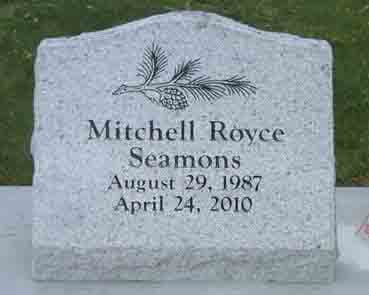
What happens if you order without checking?
The costly version of this story: a family orders a memorial they love, the stone is cut and engraved, and the cemetery refuses it — the section is flush-only, or the stone is two inches over the cap, or the design was never submitted for approval. Granite cannot be stretched or shaved after engraving, so the remedy is re-work or a new stone, and weeks or months added to an already long timeline.
This is why we refuse to skip step one. In our five-step process, the cemetery’s written requirements come before style and size decisions, every design proof is drawn within them, and nothing goes into production until your family signs off on the final proof. The order of operations is the protection.
How do memorial parks differ from traditional cemeteries?
As a general pattern — always confirm with your specific cemetery — memorial parks favor an unbroken lawn, so many of their sections allow only flush markers, and some require bronze markers, often set on a granite base. Traditional cemeteries more commonly allow the full range: upright monuments, slants, bevels, flat markers, and sometimes benches or larger family estates.
Neither is better; they are different traditions. But the difference is exactly why the same budget can point to very different memorials depending on where the plot is — compare options on our pricing page once you know what your section allows.
We help families get their cemetery’s spec sheet
Whether your cemetery is here in Reno, elsewhere in Nevada or Northern California, or across the country, the process is the same: we obtain the written monument specification, design within it, and handle the cemetery’s pre-approval paperwork alongside your proofs. Where we install, we coordinate scheduling with the cemetery; where the cemetery requires its own installer, we deliver the finished memorial to them. Cemeteries usually prepare the ground or pour cement before delivery, and we time the work around that.
Questions families ask
Does the cemetery charge its own fees on top of the headstone price?
Usually, yes. Most cemeteries charge a setting (installation) fee, and many charge an endowment or perpetual-care fee tied to the monument. These are billed by the cemetery, not by us — our prices cover the memorial itself, its engraving, and our delivery or installation, and exclude sales tax and cemetery setting and endowment fees.
Can a cemetery require its own installer?
Yes. Some cemeteries only allow their own crew or an approved contractor to set monuments. That is normal, and it does not limit who you order your memorial from: we install throughout Nevada and Northern California, and where a cemetery requires its own installer, we deliver the finished memorial to them. Families ordering nationwide work the same way — we arrange delivery to the cemetery or its approved installer.
What if my cemetery section only allows flat markers?
Flush-only sections are common, especially in memorial parks. A flat granite marker or a bronze marker on a granite base can still carry a great deal of personality — engraved artwork, a verse, and a ceramic memorial photo. Flat markers start at $1,100 including a name, dates, a verse, and a catalog design.
Will Sierra Headstone & Monument check the cemetery rules for us?
Yes — confirming cemetery requirements is step one of our five-step design process, before any design work begins. We contact the cemetery with you or for you, get their monument specification in writing, and design within it, so the memorial you approve is one the cemetery will accept.
Have your cemetery’s name handy? Call us at 775-323-1835 and we will find out exactly what it allows — before you spend a dollar or an hour on the wrong design.